 +31 (0) 416 724 800
 info@metel.nl
 Slovenščina
  Română
  Polski
  Nederlands
  Magyar
  English
  Čeština
  Български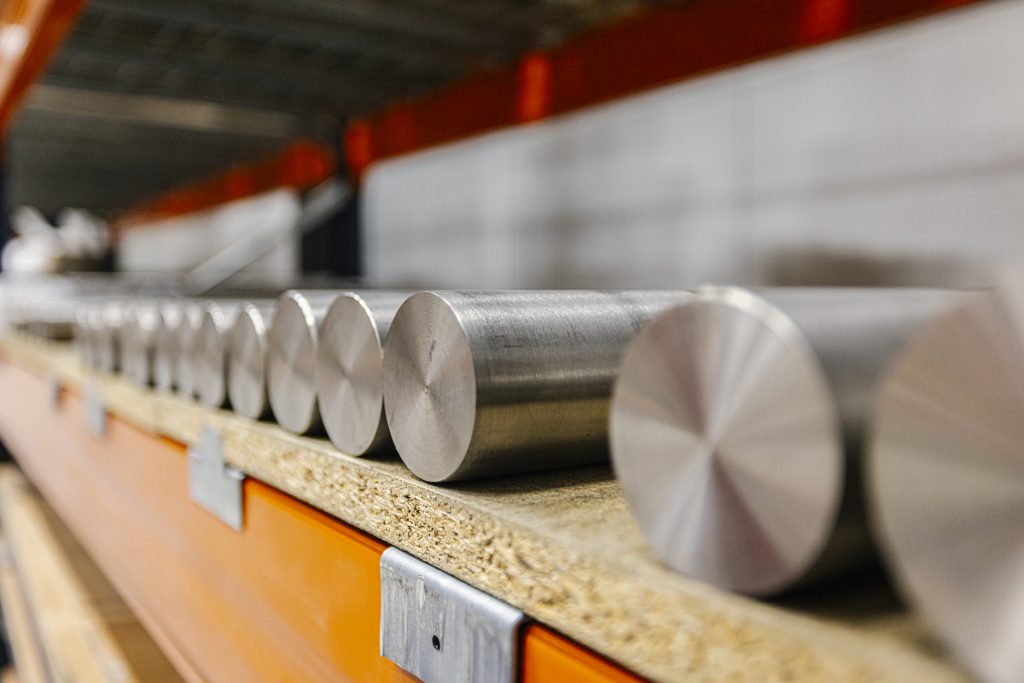
In the hierarchy of industrial metals, Tantalum occupies a unique position. It is a material that is not intimidated by the most aggressive chemical environments or scorching heat. Where metals such as steel or even Titanium succumb to the effects of hot acids, Tantalum remains unaffected. This property, combined with a melting point that is among the highest in the periodic table, makes the metal indispensable for the chemical process industry, the medical sector, and the production of advanced electronics.
In this article, we discuss the unique Tantalum properties, the comparison between Tantalum vs Titanium, and the critical role of alloys such as Ta10W in modern technologies.
Tantalum properties, resistivity and conductivity
Tantalum is a heavy, bluish-gray metal with a very high density of 16.6 g/cm³. What immediately strikes engineers, however, is the impressive melting point of no less than 2996 degrees Celsius. Only Tungsten and Rhenium surpass this heat resistance.
Besides thermal stability, the electrical properties are crucial. The electrical resistance, or resistivity, of Tantalum is approximately 13.5 micro-ohm-cm at room temperature. Although this is higher than that of copper, the ability to form an extremely stable and thin oxide layer makes Tantalum the ideal material for Tantalum capacitors. These components can store a huge amount of electrical charge in a very small volume, which is essential for the miniaturization of smartphones and medical implants.
For processing, Tantalum is surprisingly ductile; it can be drawn into very thin wires at room temperature. However, due to the high affinity with gases such as oxygen and nitrogen at temperatures above 150 degrees Celsius, any form of heat treatment or welding must take place in a high vacuum or under strictly controlled inert gas.
Chemical superiority: Tantalum corrosion resistance
When looking at Tantalum corrosion resistance, the metal performs at a level almost comparable to platinum. It is virtually immune to chemical attack by hydrochloric acid, nitric acid, and aqua regia at temperatures below 150 degrees Celsius.
This extreme resistance is invaluable in, for example, the pharmaceutical industry and the production of fine chemicals. In processes where even the smallest traces of metal corrosion can ruin the purity of a drug or chemical end product, Tantalum offers a ‚zero-corrosion‘ solution. Where alternative materials may slowly dissolve and contaminate the batch, Tantalum guarantees absolute purity and an equipment lifespan that can span decades, even with continuous use in aggressive acids.
Tantalum vs Titanium
In practice, Metel often gets the question: when do I choose Tantalum vs Titanium? Although Titanium performs excellently in seawater and oxidizing environments, it falls short in strongly reducing acids at higher temperatures. Tantalum is the necessary ’step-up‘ in those situations. Where Titanium has a protective oxide film that can dissolve in certain acids, the passivation layer of Tantalum remains intact under much more extreme conditions. This makes it the standard for heat exchangers and reactors in heavy chemical industries.
Advanced metallurgy: Tantalum alloys
To increase mechanical strength or optimize costs, Metel supplies various alloys. The most common are:
- Ta10W (Tantalum-10% Tungsten): By adding 10% Tungsten, the tensile strength increases significantly compared to pure Tantalum, while maintaining excellent corrosion resistance. This is the preferred alloy for critical parts in aerospace.
- TaNb (Tantalum-Niobium): Niobium is often added as a cost-effective alternative for applications where the extreme resistance of pure Tantalum is not fully required.
- TaHf (Tantalum-Hafnium) and TaMoW: These complex alloys are used in the most extreme thermal environments, such as rocket engines and the nuclear sector.
Certification and standards for Tantalum: ASTM standards
When purchasing Tantalum, it is essential that the material complies with international standards. At Metel, we supply exclusively according to the relevant ASTM standards:
- ASTM B364: Specification for Tantalum and Tantalum alloy ingots.
- ASTM B708: The standard for Tantalum plate, strip, and foil.
- ASTM B365: Standard for Tantalum bars and wires.
- ASTM B521: Specification for seamless and welded Tantalum tubes.
- ASTM F560: A crucial standard for medical applications, setting requirements for unalloyed Tantalum for surgical implants.
Tantalum applications: from electronics to implants
The versatility of the material translates into very diverse Tantalum applications:
- Electronics: The aforementioned Tantalum capacitors are the largest consumer of the metal worldwide.
- Medical Technology: Thanks to biocompatibility and certification according to ASTM F560, Tantalum is used for skull plates, bone fixation wire, and stents. The body does not reject Tantalum; bone tissue can even grow directly onto it (osseointegration).
- Chemical Process Industry: Coating of reactors, thermocouple protection tubes, and valves that come into contact with corrosive media.
- Superalloys: Tantalum is an essential additive in Nickel-based superalloys for turbine blades in jet engines.
Buying Tantalum: market dynamics and strategy
If you are considering buying Tantalum, you must take into account the status of Tantalum as a ‚conflict mineral‘. The extraction from coltan ore largely takes place in Central Africa (notably the Democratic Republic of Congo), where trade has historically been used to finance armed conflicts and has been associated with human rights violations. For you as an engineer or purchaser, this entails strict legislation such as the OECD guidelines and the EU regulation on conflict minerals. Ignoring the origin can have major consequences for your compliance and reputation; customers in the tech sector and medical world now demand full transparency in the supply chain. At Metel, we naturally guarantee a fully ethical and transparent supply chain (Conflict-Free).
Due to scarcity and complex extraction, the Tantalum price is more volatile than that of standard metals. A strategic partnership with Metel offers you security. We not only advise you on, for example, the technical feasibility of Tantalum vs Titanium, but also buffer market risks through strategic inventory management. Whether you are looking for tubes according to ASTM B521 or medically certified rods according to ASTM F560: we ensure a reliable supply chain.
Conclusion: working with Tantalum
Tantalum remains the ultimate material for applications where there is no room for compromise. Whether it is about miniaturizing electronics, saving lives with medical implants, or safely managing aggressive chemical processes: Tantalum performs under pressure.
At Metel, we understand that the technical nuances of corrosion-resistant alloys make the difference between years of service life or costly failure. We are happy to think along with you to perfect your designs both technically and economically, even in today’s challenging raw materials market. Would you like to discover how we can apply our expertise in Tantalum for your specific application? Our team is happy to share concrete success stories and advise you on the best approach; contact us for an appointment via 0416 – 724 800 or email info@metel.nl.